Offer of financial market insights and intelligence
Explain the complex relationships and interactions between economic variables and financial factors
Rule-based research of the economy and asset classes
Explain the cause-effect linkages of financial markets
Use of cutting-edge technologies, like machine learning
Combine
Adaptive Asset Allocation
With
Systematic Security Selection
To Perform
Beyond Behavioral Bias
Examples of Financial Market Analysis
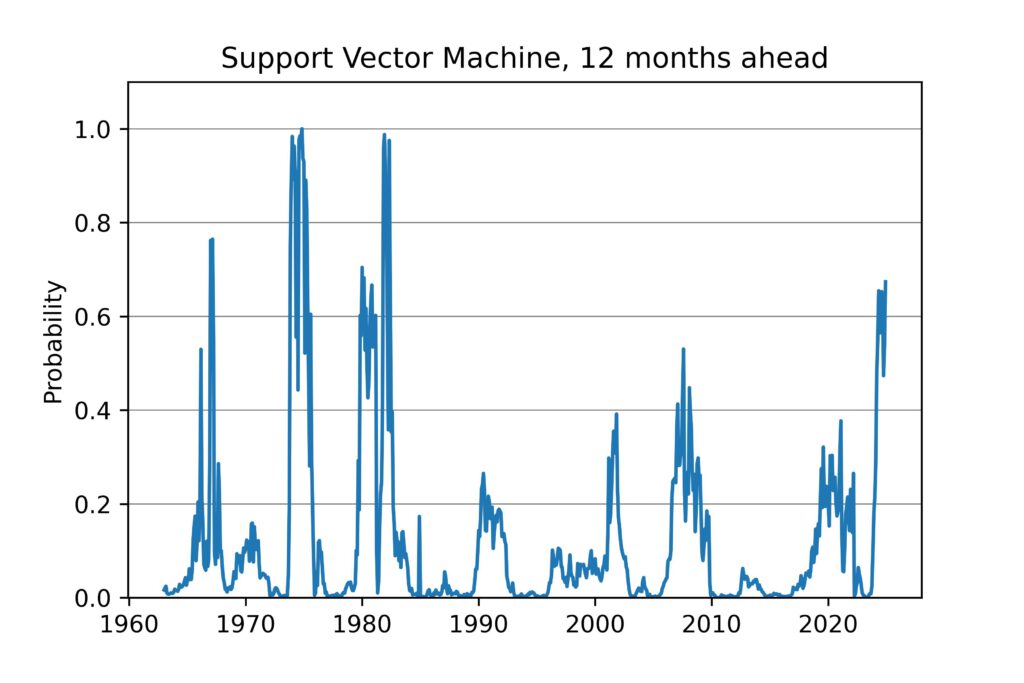
Recession Forecasting
Forecast of recessions in the US with multi-factor models and different machine learning techniques for different time lags
Idea based on the yield curve model of the Fed with statistical probit-model
Analysis factors with cluster analysis to avoid selecting related factors
Machine learning models used: K-nearest Neighbors, Support Vector, Gaussian, Decision Tree, Random Forest, Naïve Bayes
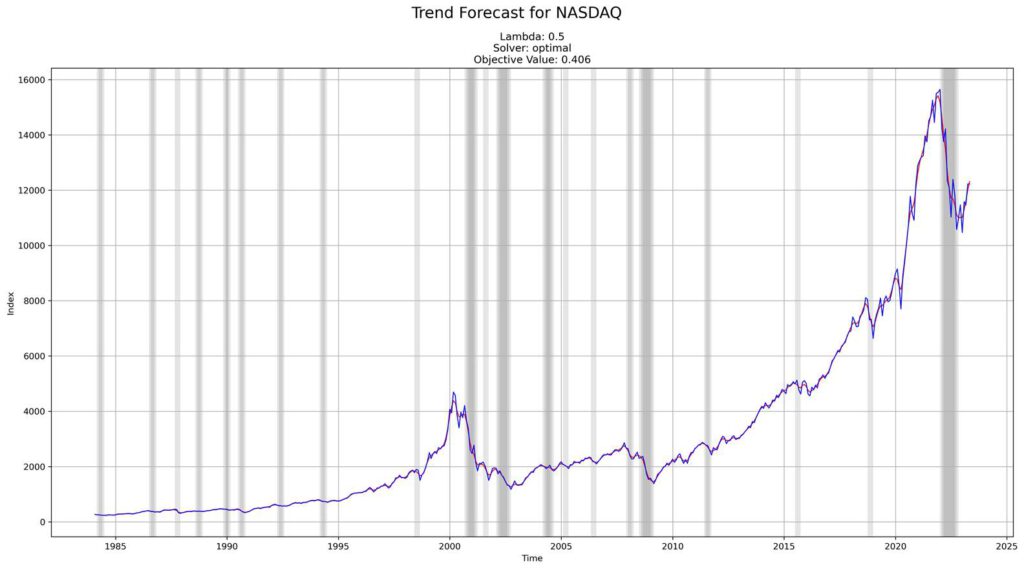
Forecasting Trend with L1-Trend Filter
Analyse stock market trends to overweight or underweight the asset class
Model based on L1-trend filtering technique
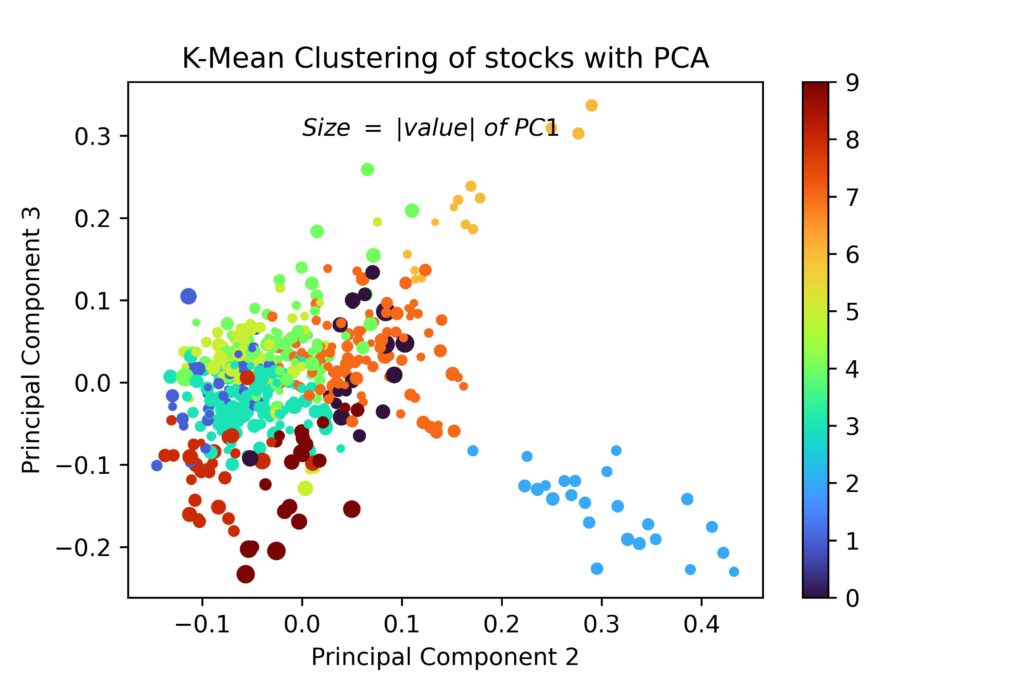
Principal Component Analysis
Application of the principal component analysis (PCA) on the components of an equity index
Decompose the dynamics of the returns into orthogonal factors
Checking the dynamics of the market: top-down vs bottom-up investment phase of the market
Clustering the stocks with the help of principal component analysis and machine learning techniques in order to improve the analysis of industries and companies
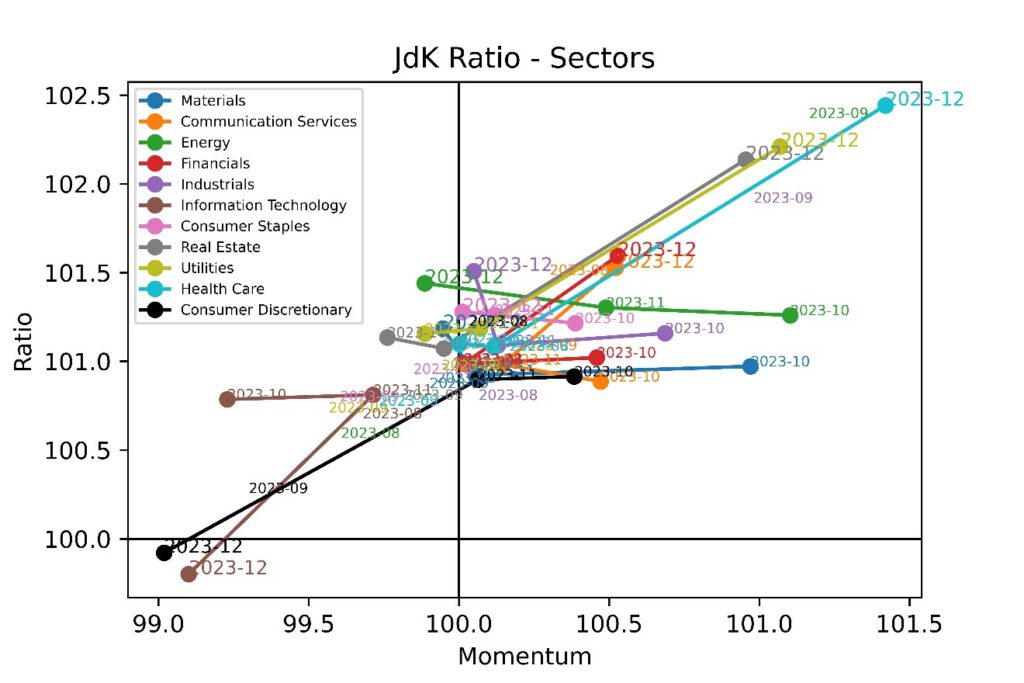
Relative Rotation Graphs
Relative Rotation Graphs by Julius De Kempenaer
Analysis of trends in relative strength in a single graph
Calculation of the JdK ratio and momentum
Flexibility on the asset universe, the period and the time horizon
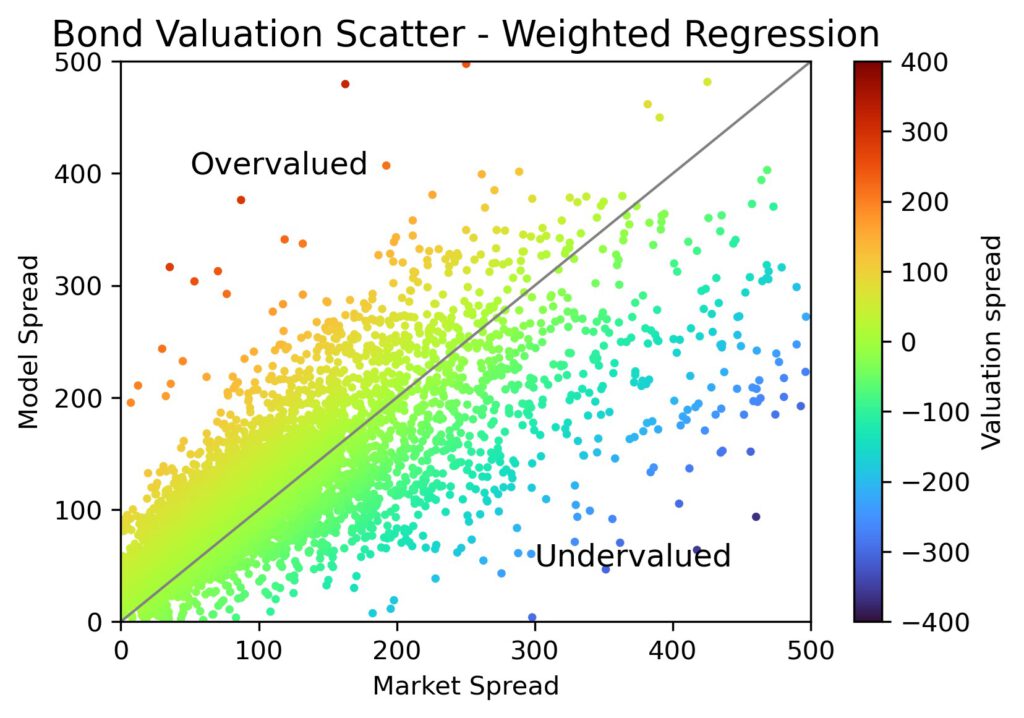
Bond Valuation
Cross-sectional regression model to evaluate the spread of bonds with different models (linear, lasso, elastic net, support vector, extreme gradient boost, light gradient boosting – Microsoft, deep learning with one input, hidden and output layer and with respective 20, 10 and 1 nodes)
Model used for EUR-denominated and USD-denominated corporate and government bonds
Estimation of spreads for large universe of issues
Evaluation and comparison of the different models
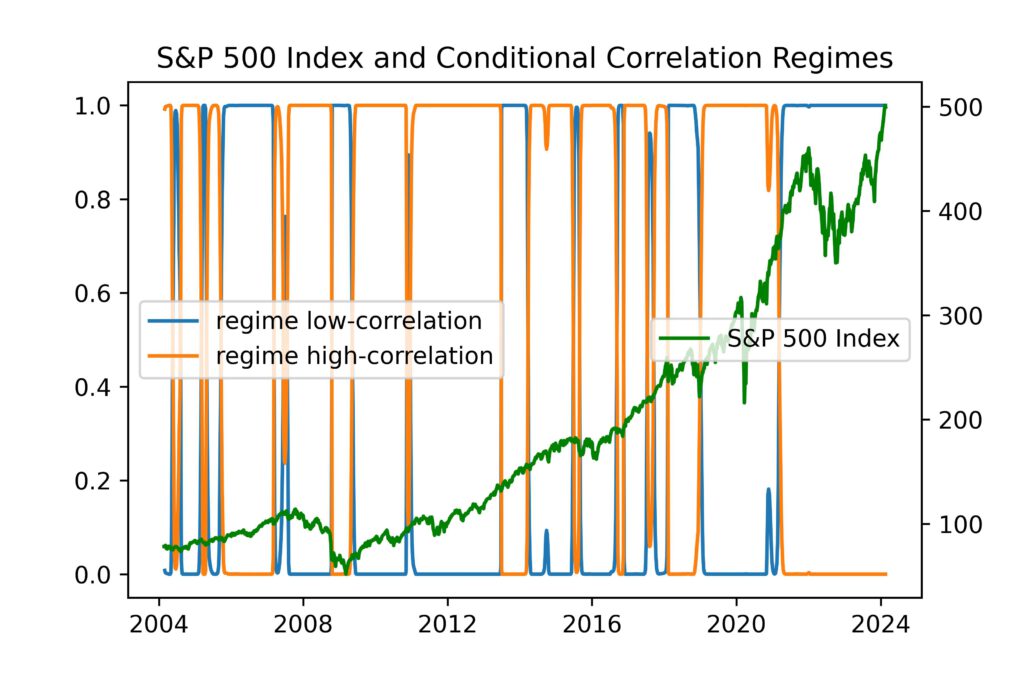
Conditional Correlation and Markov Switching Models
Estimation of the conditional correlation with multivariate Dynamic Conditional Correlation – Generalized AutoRegressive Conditional Heteroskedasticity (DCC – GARCH)
Computing the probability of an event with low or high correlation between equity and bonds
Markov Switching Dynamic Regression of the residuals of the DCC – GARCH model to predict the correlation regime switch
Out-of-sample backtesting of strategies based on Markov Switching models
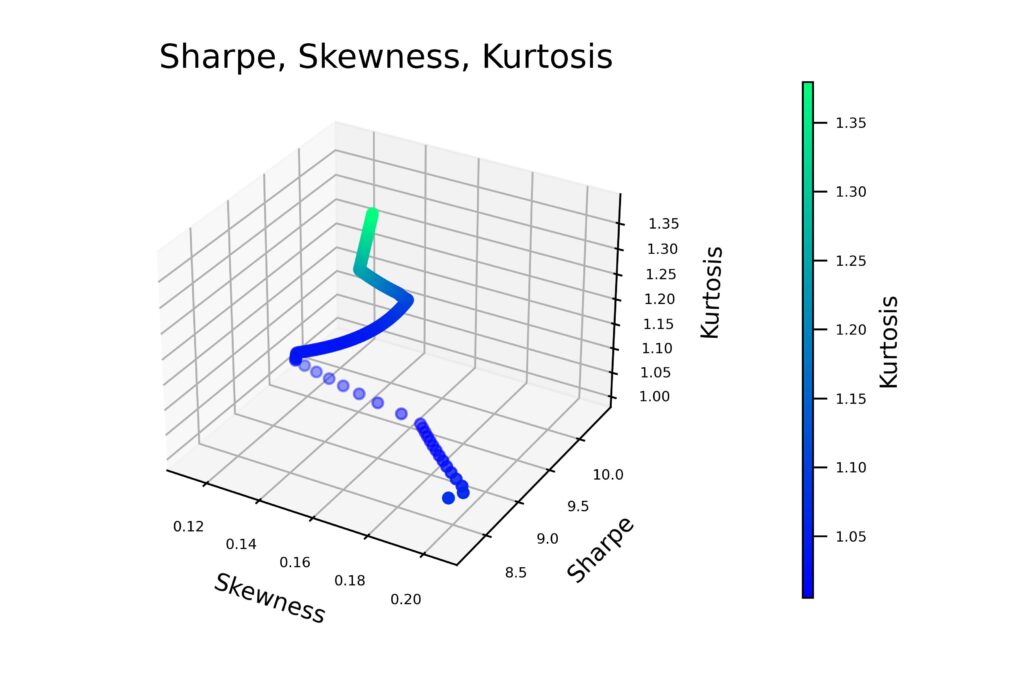
Portfolio Optimization with Higher Moments
Mean-variance optimization of different assets in order to perform a global asset allocation
Optimize the Sharpe ratio in a mean-variance framework
Portfolio optimization under turnover, return and risk constraints
Monitoring the weights of the different asset classes
Controlling the Sharpe ratio, skewness and kurtosis for a universe of assets
Our website only uses cookies that are essential for its proper functioning to ensure you have the best possible browsing experience.